
05 Aug 2026
•
By Buy That Horse
•
62 views
How to Realistically Price Your Horse for the South African Market
One of the most common mistakes sellers make is pricing a horse based on what they paid for it rather than what the current market is willing to pay.
One of the most common mistakes sellers make is pricing a horse based on what they paid for it rather than what the current market is willing to pay.
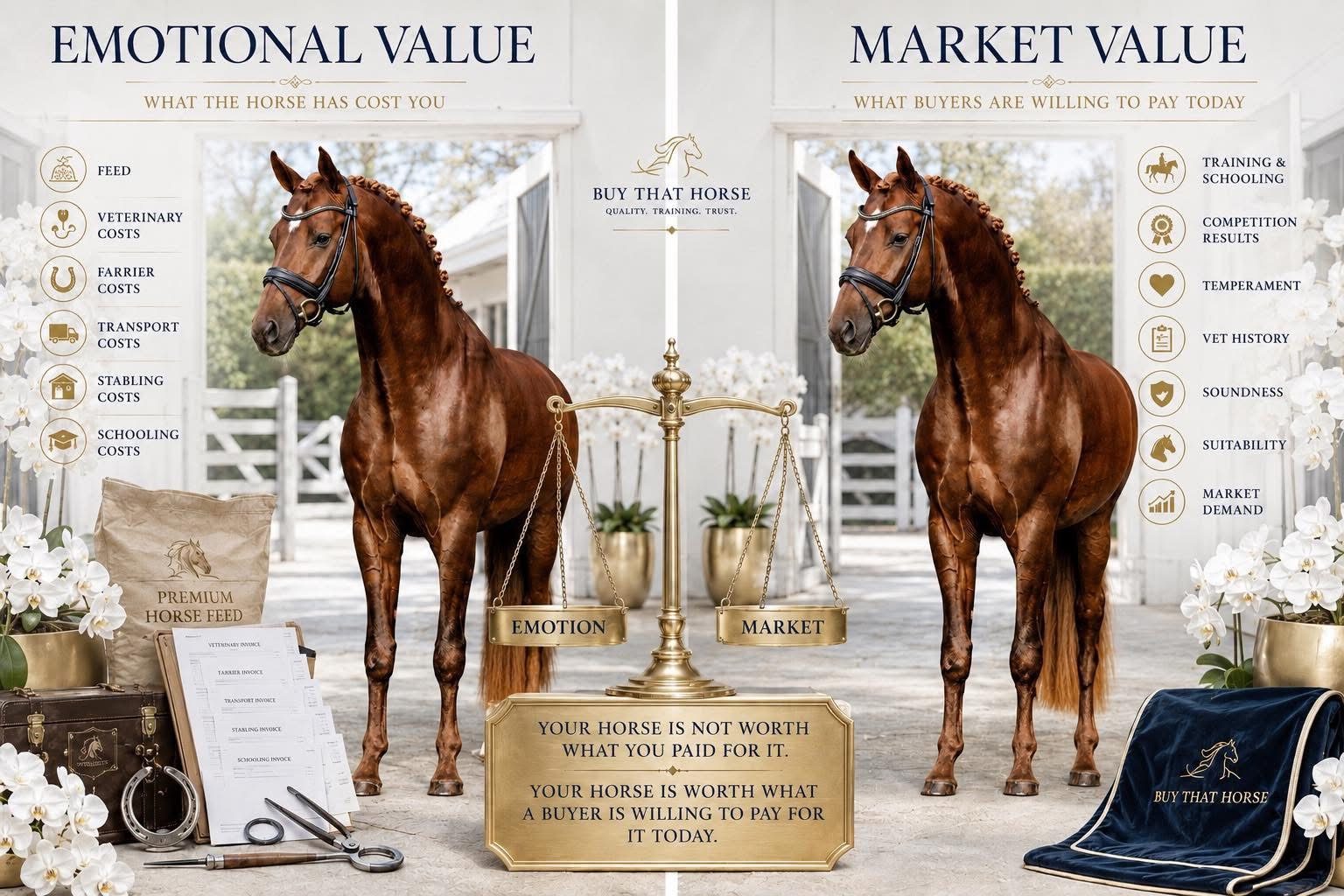
While every owner wants to achieve the best possible price for their horse, the reality is that a horse is only worth what a willing buyer is prepared to pay at a particular point in time.
The Purchase Price Does Not Determine the Current Value
Many owners buy a horse for a certain amount and expect to receive the same amount back years later.
Unfortunately, horses do not work like property investments.
If you purchased a horse three years ago for R80,000 and have done very little to improve its education, competition record, training, condition, marketability or experience, there is no guarantee that the horse is still worth R80,000 today.
In some cases, the horse may be worth less. In other cases, it may be worth significantly more if substantial value has been added through training, competition exposure and professional management.
What Actually Determines a Horse’s Value?
Training and Schooling
A horse that has received consistent professional schooling is usually worth more than a horse that has spent months or years standing in a field. Buyers are paying for the time, expertise and consistency invested into the horse.
Competition Record
Competition results provide evidence of a horse’s ability. A horse successfully competing at graded level often commands a higher price than a horse with no proven record.
Age
Young horses may have potential but also carry uncertainty. Older horses may have extensive experience but could have physical limitations. The market generally favours horses that are experienced enough to be reliable while still having many productive years ahead.
Temperament
Temperament is often one of the most valuable yet overlooked factors. A safe, sensible horse suitable for amateurs, children or nervous riders may attract more buyers than a talented but difficult horse.
Health and Soundness
Veterinary history, soundness and ongoing maintenance requirements all influence value. No horse is perfect, but buyers want transparency and realistic expectations.
Breed and Bloodlines
Certain bloodlines and breeds remain highly sought after in South Africa, particularly when supported by performance records. However, breeding alone does not guarantee value.
Market Demand
Market demand changes constantly. A horse may be worth more during periods when buyers are actively searching for a specific type of horse and less when there is an oversupply of similar horses available.
The Cost of Ownership Is Not the Buyer’s Responsibility
One of the biggest pricing mistakes occurs when owners calculate:
Purchase Price
Livery
Farrier
Vet Bills
Feed
Lessons
Transport
Unfortunately, the market does not work this way. Buyers purchase the horse based on its current value and suitability, not on the total amount spent owning it.
Consider the Cost of Waiting
Owners often refuse realistic offers because they are holding out for a higher figure. However, six months of feed, stabling, veterinary care, farrier visits and transport can easily cost more than the difference they hoped to gain.
A horse that sells quickly often leaves the seller in a better financial position than one that remains on the market while ongoing costs continue to accumulate.
When a Horse Stays on the Market Too Long
Buyers pay attention to how long a horse has been advertised.
Is there something wrong with the horse?
Has the horse failed vettings?
Is the seller difficult to negotiate with?
Is the horse overpriced?
Whether these assumptions are true or not, they can affect buyer confidence. A stale listing often receives fewer enquiries over time.
Even the Best Marketing Cannot Overcome Unrealistic Pricing
Professional horse sales agents, trainers and marketers can create outstanding advertising, photographs and videos, but no amount of marketing can persuade buyers to pay substantially more than the market believes a horse is worth.
Emotion Can Distort Pricing
Many owners have strong emotional attachments to their horses. While understandable, sentiment does not determine market value.
Look at Comparable Horses
What are similar horses currently selling for?
How long have comparable horses been advertised?
What level of schooling do they have?
What competition records do they have?
Are they realistically attracting enquiries?
Price to Sell, Not to Sit
A realistically priced horse generally attracts more enquiries, more viewings and a better chance of finding the right home.
Final Thoughts
Every horse deserves the right home, but finding that home starts with realistic expectations.
Remember:
A horse is not worth what you paid for it.
A horse is not worth what you spent on it.
A horse is not worth what you hope it is worth.
A horse is worth what a knowledgeable buyer is realistically willing to pay for it today.
While every owner wants to achieve the best possible price for their horse, the reality is that a horse is only worth what a willing buyer is prepared to pay at a particular point in time.
The Purchase Price Does Not Determine the Current Value
Many owners buy a horse for a certain amount and expect to receive the same amount back years later.
Unfortunately, horses do not work like property investments.
If you purchased a horse three years ago for R80,000 and have done very little to improve its education, competition record, training, condition, marketability or experience, there is no guarantee that the horse is still worth R80,000 today.
In some cases, the horse may be worth less. In other cases, it may be worth significantly more if substantial value has been added through training, competition exposure and professional management.
What Actually Determines a Horse’s Value?
Training and Schooling
A horse that has received consistent professional schooling is usually worth more than a horse that has spent months or years standing in a field. Buyers are paying for the time, expertise and consistency invested into the horse.
Competition Record
Competition results provide evidence of a horse’s ability. A horse successfully competing at graded level often commands a higher price than a horse with no proven record.
Age
Young horses may have potential but also carry uncertainty. Older horses may have extensive experience but could have physical limitations. The market generally favours horses that are experienced enough to be reliable while still having many productive years ahead.
Temperament
Temperament is often one of the most valuable yet overlooked factors. A safe, sensible horse suitable for amateurs, children or nervous riders may attract more buyers than a talented but difficult horse.
Health and Soundness
Veterinary history, soundness and ongoing maintenance requirements all influence value. No horse is perfect, but buyers want transparency and realistic expectations.
Breed and Bloodlines
Certain bloodlines and breeds remain highly sought after in South Africa, particularly when supported by performance records. However, breeding alone does not guarantee value.
Market Demand
Market demand changes constantly. A horse may be worth more during periods when buyers are actively searching for a specific type of horse and less when there is an oversupply of similar horses available.
The Cost of Ownership Is Not the Buyer’s Responsibility
One of the biggest pricing mistakes occurs when owners calculate:
Purchase Price
Livery
Farrier
Vet Bills
Feed
Lessons
Transport
Unfortunately, the market does not work this way. Buyers purchase the horse based on its current value and suitability, not on the total amount spent owning it.
Consider the Cost of Waiting
Owners often refuse realistic offers because they are holding out for a higher figure. However, six months of feed, stabling, veterinary care, farrier visits and transport can easily cost more than the difference they hoped to gain.
A horse that sells quickly often leaves the seller in a better financial position than one that remains on the market while ongoing costs continue to accumulate.
When a Horse Stays on the Market Too Long
Buyers pay attention to how long a horse has been advertised.
Is there something wrong with the horse?
Has the horse failed vettings?
Is the seller difficult to negotiate with?
Is the horse overpriced?
Whether these assumptions are true or not, they can affect buyer confidence. A stale listing often receives fewer enquiries over time.
Even the Best Marketing Cannot Overcome Unrealistic Pricing
Professional horse sales agents, trainers and marketers can create outstanding advertising, photographs and videos, but no amount of marketing can persuade buyers to pay substantially more than the market believes a horse is worth.
Emotion Can Distort Pricing
Many owners have strong emotional attachments to their horses. While understandable, sentiment does not determine market value.
Look at Comparable Horses
What are similar horses currently selling for?
How long have comparable horses been advertised?
What level of schooling do they have?
What competition records do they have?
Are they realistically attracting enquiries?
Price to Sell, Not to Sit
A realistically priced horse generally attracts more enquiries, more viewings and a better chance of finding the right home.
Final Thoughts
Every horse deserves the right home, but finding that home starts with realistic expectations.
Remember:
A horse is not worth what you paid for it.
A horse is not worth what you spent on it.
A horse is not worth what you hope it is worth.
A horse is worth what a knowledgeable buyer is realistically willing to pay for it today.